Brill’s typographical disaster

I recently started reading an electronic copy of László Török’s Between Two Worlds: The Frontier Region between Ancient Nubia and Egypt, 3700 BC – 500 AD, and I was shocked at how shoddy it was. Letters and punctuation were missing on almost every page, and the letter f was frequently replaced with an ß! See, for example, this excerpt from page 179:

A signi cant process of change seems to have started in the second half of the Nineteenth Dynasty period. Merenptah s (1213 1203) rst viceroy, Mesui, was probably buried at Aniba (see above), discontinuing (at least for one generation) the traditional Theban burial of the viceroys.


The book wasn’t published by CreateSpace or Publish America. It was the work of Brill, a 300-year-old Dutch publisher that specializes in academic texts. I’m usually rather fond of Brill. A lot of their titles are available in digital form through Brill E-Books, and since UW-Madison subscribes to this service, I can access them for free.

I’m hopeful that the problems with Between Two Worlds are an aberration since I’ve downloaded other Brill e-books, and they’ve been fine. Still, a cockup of this magnitude is a huge embarrassment for such a prestigious publisher, and I hope they’ll fix it at some point.

‘Gods of Egypt’ Doesn’t Seem to Have Done Its Homework

I’ve discovered that Hollywood is planning to make an epic fantasy movie set in ancient Egypt. Entitled Gods of Egypt, it will star some big names, including Nikolaj Coster-Wald, Gerard Butler, and Geoffrey Rush. At first, I was cautiously excited; naturally, the idea of an epic fantasy movie set in Egypt should be right up my alley. But when I read the synopsis on IMDB, my heart sank: “Set, the merciless god of darkness, has taken over the throne of Egypt and plunged the once peaceful and prosperous empire into chaos and conflict.”


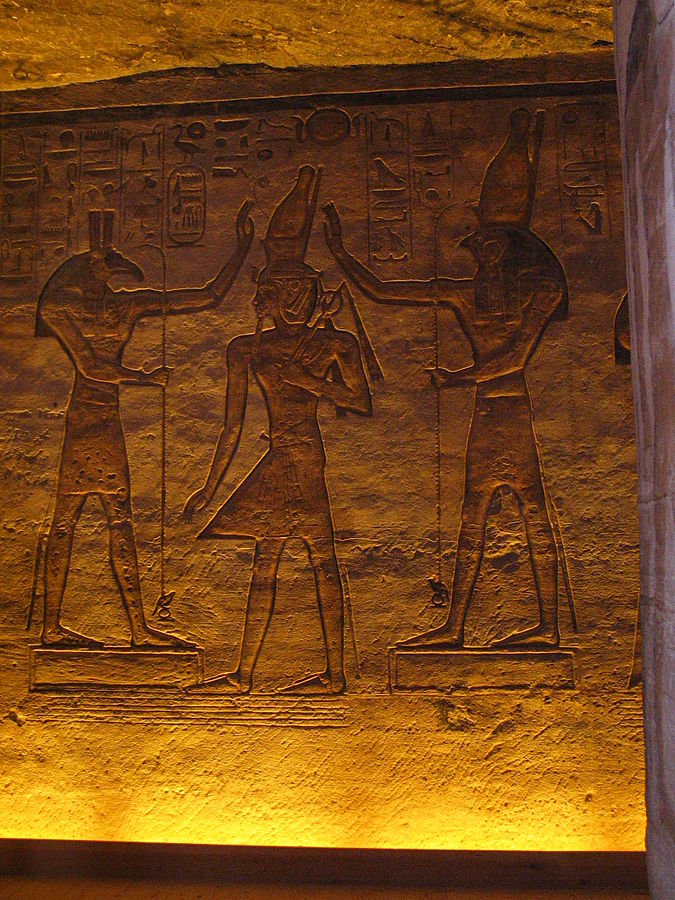
"SethAndHorusAdoringRamsses" by en:User:Chipdawes - en:Image:SethAndHorusAdoringRamsses.JPG. Licensed under Public domain via Wikimedia Commons - http://commons.wikimedia.org/wiki/File:SethAndHorusAdoringRamsses.JPG#mediaviewer/File:SethAndHorusAdoringRamsses.JPG.
“SethAndHorusAdoringRamsses” by Chipdawes –  public domain via Wikimedia Commons.

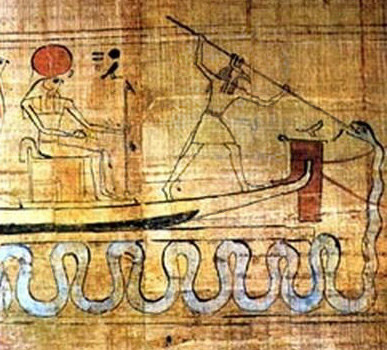
From an Egyptological perspective, characterizing Set as an evil god is highly problematic. Although he’s often referred to as a ‘god of chaos,’ that’s a modern gloss on his character. It’s true that he was demonized in the Late Period, but in earlier times he was a much more ambivalent figure. For much of Egyptian history, his cult flourished in the Delta region and at Ombos. Several pharaohs were named after him, such as Seti I, whose name literally means ‘man of Set’ (ordinary people also incorporated Set’s name into their own as well). There are also a number of depictions of Set crowning the king alongside Horus (the one on the right is taken from Ramesses II’s small temple at Abu Simbel). Set also had a reputation for martial prowess, which is why he is often shown at the forefront of Re’s solar barque, spearing the evil snake-creature Apep.

However, he definitely had a darker side. As early as the Pyramid Texts, he was described as the murderer of his brother Osiris, and there are references to him fighting Horus (who can be either his brother or his nephew, depending on the text!) for the throne of Egypt. An extended narrative of Set’s struggle with Horus for the throne of Egypt can be found in the Contendings of Horus and Set, which was written in the New Kingdom. There, Set is portrayed as a violent buffoon who is easily tricked by Horus into building a boat out of stone. When the gods finally decide to award the throne to Horus, Set is compensated by being given dominion over the desert. He still retained Re’s favor, as well.

Set defending Re from Apep by An unknown workman - Egyptian Museum, Cairo. Licensed under Public domain via Wikimedia Commons - http://commons.wikimedia.org/wiki/File:Set_speared_Apep.jpg#mediaviewer/File:Set_speared_Apep.jpg.
Set defending Re from Apep by An unknown workman – Egyptian Museum, Cairo. Public domain via Wikimedia Commons.


Set didn’t become a totally evil figure until the Late Period, at which point he replaced Apep as the embodiment of evil. It’s not entirely clear why he fell from grace, but Herman te Velde has suggested that his demonization was due to Egypt’s conquest by outsiders such as the Assyrians and the Persians. Set was historically seen as the patron of foreigners, and their subjugation of Egypt might have made Set’s cult less attractive.[note]H. te Velde, Seth: God of Confusion (Leiden: E. J. Brill, 1967), 138-140.[/note]

Unfortunately, it’s the negative characterization of Set that seems to prevail in popular culture today. Writers often cast him as the Egyptian version of the Christian Devil, despite the anachronistic nature of such an approach. Rick Riordan is one of the few authors who has demonstrated an awareness of Set’s nuanced nature.

The fact that the team behind Gods of Egypt has chosen such a hackneyed and inaccurate approach makes me doubt the quality of the rest of their research. I fear their depiction of Egypt will be little more than a bunch of people with tea towels on their heads running around a set that’s festooned with a random assemblage of Egyptianesque artifacts. Oh, and apparently most of them will be white for some unfathomable reason (perhaps the casting directors are disciples of Sir Flinders Petrie!).


John Baines

I just learned that John Baines retired at the end of last year. Baines was Professor of Egyptology at The Queen’s College, Oxford, and he’s something of a living legend in the Egyptological community. A professor by 30, he went on to have a distinguished scholarly career, as his list of publications vividly demonstrates.

Baines’ work has been invaluable to me over the years. He co-authored The Cultural Atlas of Ancient Egypt, which was one of the first scholarly books about Egypt that I ever owned. Although it’s outdated in places, it still provides a solid overview of Egyptian civilization, and it’s a must have for any Egyptophile (though, sadly, it seems to be out of print). Baines has also made a major contribution to the study of literacy in ancient Egypt, and his 1983 article on the subject is still widely cited. His most recent book is about elite culture, and I plan to read it in the near future.

Baines is also a really nice guy. Many years ago, I emailed him with some questions about Egypt. I was so young that I didn’t have my own email address, and I had to send it using my mom’s account (and I think I’ve just dated myself!). I can only vaguely remember the questions; I believe I asked him something about priestly celibacy and Egypt in the Greco-Roman period. But he wrote back with detailed, helpful answers, and I’ve always appreciated his willingness to answer questions from a random American kid.

The Egyptians would have called Baines “a good scribe and an exceedingly wise man,” and his successor will have some big shoes to fill. I hope he has a long and happy retirement, and with any luck, we’ll be reading his work for many years to come.

Introducing Woseribre Senebkay

The list of pharaohs has just gotten a bit longer. The University of Pennsylvania has uncovered the tomb of a pharaoh named Woseribre Senebkay, who apparently ruled as part of a previously unknown dynasty based out of Abydos. This news has made it into the mainstream media, but I highly recommend reading the official Penn Museum announcement. A lot of the mainstream coverage has been sort of silly (such as this gem from the Daily Pennsylvanian: “Most tombs have unadorned walls, stripped of their decorations by ancient plunderers”.[note]Tomb walls were decorated with frescoes and carvings. Not exactly something a tomb robber would make off with![/note]).

As is so often the case, the tomb was plundered in antiquity, so there isn’t a lot of bling left. Poor Senebkay even suffered the indignity of having his mummy torn apart by grave robbers. Judging from the remains of his canopic chest (which had the name of a previous royal owner covered over with gilding!), it seems that his burial may have featured a lot of ‘recycled’ material.

Senebkay reigned c. 1650 BCE during a time scholars call Second Intermediate Period. The SIP was a time of political fragmentation and disorder, and we don’t really have a firm grasp of the chronology. Until now, Senebkay was pretty much unknown to history, though the Turin King List contains two fragmentary references to kings with similar throne names.

Ratty bits of history.
The Turin King List. Image courtesy of Wikimedia Commons.

Although Senebkay styled himself ‘King of Upper and Lower Egypt’ in his tomb, he was probably little more than a local potentate whose domain was limited to Abydos and its environs. In his time, the Delta was under the control of foreign kings who belonged to a group called the Hyksos (a word that’s derived from the Egyptian Ḥq3-ḫ3st, or ‘Rulers of Foreign Lands’), while Thebes was ruled by a dynasty that would eventually expel the Hyksos and reunify Egypt. The presence of reused material suggests that he might have been comparatively poor, though it’s also possible that he simply died before he had time to acquire his own funerary equipment.

This discovery just goes to show that, despite all the advances that Egyptology has made over the past 200 years, there are still gaping lacunae in our understanding of Egyptian history.

Demon Advent Calendar

The Demonology Project has come up with a cool way to promote themselves over the festive season: the Demon Advent Calendar. Each day, they’ll post a different Egyptian demon, and they’re certainly drawing from eclectic sources. Day 1 featured “He Who Drives Off Those Who Would Demolish” from the Book of Two Ways, while Day 2 featured an unnamed man-eating hippo demon from a magician’s wand in the Metropolitan Museum of Art.

This is a great example of how academic projects can engage with the public in a fun and interesting manner. One of my big gripes about the Academy is its tendency to ignore the little people outside the ivory tower, so I’m always happy when I see academics bucking that trend. I also like that the Demonology Project hasn’t felt the need to dumb things down. They provide just the right amount of info to get the point across without burying non-specialists in a bunch of extraneous details.

Now if only the Demon Advent Calendar came with chocolate… 🙂

What’s in a name?

One of the problems I’ve had to face when writing the Khamtir books is the issue of pharaonic names.

Egyptologists usually refer to a king by his birth name plus an ordinal number to differentiate him from similarly named kings (e.g. Ramesses II). This convention is also used in a lot of historical fiction set in ancient Egypt, but I’ve been reluctant to follow suit. For starters, it would cause confusion since the three kings who play a role in my novels would all be called ‘Ramesses.’ Also, there is an increasing amount of evidence that suggests that their reigns overlapped to some degree. In my books, I use the chronology proposed by Ad Thijs. He believes that the reigns of Ramesses IX and Ramesses XI may have overlapped, and when Ramesses IX died, Ramesses X replaced him on the throne and ruled alongside Ramesses XI for a brief period of time. Once Ramesses X was dead, Ramesses XI was finally in control of the entire country. Trying to use ordinals in these circumstances would be rather nonsensical.

The birth name (left) and throne name (right) of Tutankhamun. Courtesy of Wikimedia Commons.


Confusion aside, the ‘birth name plus ordinal’ system is also anachronistic. Although Egyptian kings had five names, their prenomen (also known as their ‘throne name’) and their nomen (also known as their ‘birth name’) were used the most. So the main pharaoh in my books, Ramesses XI, would have been known to his contemporaries as  ‘Menmaatre – Setepenptah’ (which can be translated as ‘The Justice of Re Endures – Chosen of Ptah’) and ‘Ramesses – Khaemwaset – Meryamun – Netjerheqaiunu’ (which translates as ‘Re has fashioned him – He Appears in Waset – Beloved of Amun – Divine Ruler of Iunu’). It has been theorized that a king’s names served as a sort of ‘vision statement’ for his reign. Some kings even changed them as their reign wore on, perhaps to reflect changing circumstances.

When I need to refer to Ramesses XI in dialogue or narration, I use the first part of his throne name: ‘Menmaatre’ (though I may opt to use the abbreviated form ‘Menmare’ instead). It’s not difficult to pronounce, so it shouldn’t be a stumbling block to anyone. If I need to be very formal, I’ll add the second part (known as the epithet), but I decided to translate it in order to avoid overloading the reader with strange words. 🙂 I know of at least one author who actually translates the entire royal name, but in that case, the king was only mentioned in passing in a short story. Referring to ‘King The Justice of Re Endures’ throughout an entire novel would get old quickly!

Hackers attack Egyptology site

Yes, you read that correctly. Apparently, a group of hackers forced the owners of Egyptological, an online publication dedicated to Egyptology, to take the site down after it came under sustained attack. Although no details have been confirmed, it’s been speculated that the hackers view Egyptology-related sites as “a form of political threat.”

This is one of those times where I feel like I’ve stumbled into Bizarro World. How on earth is an Egyptological journal a political threat? It discussed people and events that have been dead and done for millennia, for crying out loud! It’s hardly a hotbed of sedition.

What makes this doubly sad is that Egyptological was a neat project. It offered both a journal of original academic research and a magazine aimed at the general public. The best part is that both were available to everyone, free of charge. It was a great example of how the web can help spread academic knowledge beyond the confines of the ivory tower.

Fortunately, the people behind Egyptological haven’t thrown in the towel. They’ve rebuilt the site with a new web host, and most of their back issues are available once more. Even better, they’re planning to come out with a new issue in the coming weeks. Let’s hope their troubles are finally at an end.

New light on the Harem Conspiracy and Unknown Man E

Ramesses III made headlines recently when a team of scientists revealed that a CT scan of his mummy indicated that his throat had been slashed.

The head of Ramesses’ mummy. Photo courtesy Wikimedia Commons.

Egyptologists have long suspected that his reign might have ended in some form of skullduggery. Thanks to a remarkable set of papyri, we know that one of his junior queens, Tiye, tried to instigate a coup in order to place her son Pentawere on the throne. The conspiracy seems to have been quite wide-ranging, and it included a number of palace officials as well as a military officer from Nubia. Ultimately, they were tried by a special commission of judges, and most of the conspirators were either forced to commit suicide or executed.

Unfortunately, the trial records don’t say whether the plot against the king was successful. Until now, many Egyptologists believed that the king survived for at least a little while since the trial records imply that he was the one who ordered the judges to investigate the matter. But the forensic evidence makes it clear that he would have died almost instantly.

The scientists may also have identified the body of the luckless Prince Pentawere. Genetic testing revealed that the mummy known as Unknown Man E is probably a son of Ramesses III. Unknown Man E has long been a puzzle ever since he was discovered among the cache of royal mummies at Deir el-Bahri in the late 19th century. Found in an unmarked coffin, his body had been wrapped in sheepskin, which the Egyptian considered ritually impure. His body hadn’t been properly mummified, and his tortured expression suggested that he died in incredible agony. Recent examination of his mummy has found marks on his neck that could be evidence of strangulation (although we know Pentawere was condemned by the court, we don’t know how he actually met his end).

While none of this provides conclusive proof of Pentawere’s identity, the circumstantial evidence is certainly compelling. Though I do think it is curious that they bothered to save his body at all. Not only that, but they also took the time to move it to a safe place when the royal necropolis was dismantled in the 21st dynasty. I would have thought that regicide would be so awful that they would have wanted to destroy his body so that he couldn’t have any kind of afterlife. Then again, since he didn’t receive a proper burial and there was nothing to perpetuate his name, his posthumous existence would have been a bleak one!

Daily Life of the Egyptian Gods

If you’re looking for a good book about ancient Egyptian religion, you should pick up Daily Life of the Egyptian Gods by Dimitri Meeks and Christine Favard-Meeks. It’s not new, but I hadn’t gotten around to reading it until now. And I’m sure glad I did: it’s probably one of the best general reference books I’ve ever read.

Originally published in French, the book treats the Egyptian gods as if they were an ethnic group being studied by anthropologists. At first, I thought that sounded like a gimmick, but it’s a surprisingly effective approach. But where the book really shines is its use of primary sources. The authors draw upon some very obscure texts, which allows them to provide a level of detail that you rarely see in general reference works. Unfortunately, many of these texts are only available as hard-to-find French translations, so accessing them can be almost impossible unless you can consult a dedicated Egyptological collection and are reasonably proficient at reading French. But thanks to this book, the general English-speaking public can at least get a glimpse of them.

A historical hatchet job

While browsing the stacks of Memorial Library the other day, I came across a copy of Toby Wilkinson’s The Rise and Fall of Ancient Egypt. To be honest, I’d been avoiding it for some time. When it was published, Wilkinson made it very clear that he wrote the book with an agenda in mind. He believes that scholars and the general public tend to view pharaonic culture with “misty-eyed reverence,” and his book is an attempt to shatter their rose-tinted spectacles. Despite my misgivings, I had a sense of morbid curiosity about the book. So when I saw it on the shelves, I decided to take a gander at it and see if my fears were grounded in reality.

I decided to start out by seeing what he had to say about the end of the 20th dynasty, which is the period I write about in my fiction. Not surprisingly, his account focuses on the travails of Amenhotep and Panhesy (which form the backdrop of The World Inverted) since that’s the best-documented episode from an otherwise shadowy era. And when I say that it’s the “best-documented episode,” I mean we have a handful of random documents that refer to it in varying levels of detail. But we still know next to nothing about it, and scholars still debate the basic sequence of events.

You would never guess that from Wilkinson’s book, however. He presents a clear narrative that begins when a group of “hungry, desperate, and frustrated” Thebans remove Amenhotep from the high priesthood of Amun because of his “intransigence.” Amenhotep reluctantly appeals to Ramesses XI for help (“[g]roveling to the pharaoh was an unwelcome prospect for Amenhotep, but he knew it was the only path back to power”), and the king dispatches Panhesy, the Viceroy of Kush, to restore the ousted prelate.

But when Panhesy arrives, he brings “the roughness of military justice” with him, complete with summary executions. He also takes control of the royal granaries, which leads Ramesses to grow concerned since he can “sense Thebes and the south slipping away.” He dispatches General Piankh to dislodge Panhesy, but Piankh ends up ravaging Thebes in the requisite “orgy of destruction.”

Piankh’s rule in Thebes is characterized as a “military junta” that rules “with a rod of iron,” and of course Wilkinson quotes Piankh’s famous letter to his wife where he asks her to kill two policemen and throw their bodies into the river.  When Piankh dies, his ‘junta’ chooses Herihor (“a mature and capable leader in [Piankh’s] mold”), and Piankh’s widow swiftly marries him in a “brilliantly calculated move” that allows her to retain power.

It’s all very gripping, but Wilkinson has fleshed out the bare facts with a healthy amount of conjecture. We have no idea why Amenhotep was removed from office. We also don’t know Panhesy’s exact role in the affair. Far from being Amenhotep’s savior, he was probably the one to drive him from office (a statement made a few years later records that a certain event occurred “when Panhesy came and suppressed my superior (Amenhotep) though there was no fault in him.”). There’s also no evidence that Panhesy appropriated royal granaries. As Aidan Dodson points out in Afterglow of Empire, the evidence suggests that Panhesy eventually returned to favor, so there’s no reason to assume that his association with the royal granaries indicates anything untoward.

Similarly, we know very little about Piankh. Characterizing him as “an army man through and through, brusque, determined, and ruthlessly efficient” is a bit of a stretch given the lack of any firsthand accounts of his character. While there is some evidence that there may have been some sort of skulduggery going on (including the Nodjmet letter mentioned above), it’s almost impossible for us to draw firm conclusion. We have no idea why he wanted the policemen dead—there’s certainly no evidence that they were “mutter[ing] against the junta!”

All this would be fine if Wilkinson were writing historical fiction. But he isn’t; he’s writing something that purports to be history. I realize that he’s writing for a popular audience and therefore comes under more pressure to liven things up, but I think he should have made it clear where the facts end and his conjecture begins. In the endnotes that accompanied the bit I read, he simply mentions that the end of the 20th dynasty is a “hotly debated topic” and alludes to the disagreements over whether Herihor succeeded Piankh or vice versa.

Thankfully, there’s an alternative if you’re interested in the darker side of pharaonic civilization. Pascal Vernus’s Affairs and Scandals in Ancient Egypt is more limited in scope (he focuses on the end of the New Kingdom), but it does a nice job of examining societal turbulence without resorting to sensationalism.