My favorite museum

Ever since I can remember, I’ve loved visiting museums.  My first museum memory is of the tiny Egyptian collection at the Buffalo Museum of Science (I think it consisted of two mummies and some broken pots!).  Since then, I’ve been fortunate enough to be able to visit some of the greatest museums in the world.  But there’s one in particular that will always hold a special place in my heart: the University of Pennsylvania Museum of Archaeology and Anthropology.

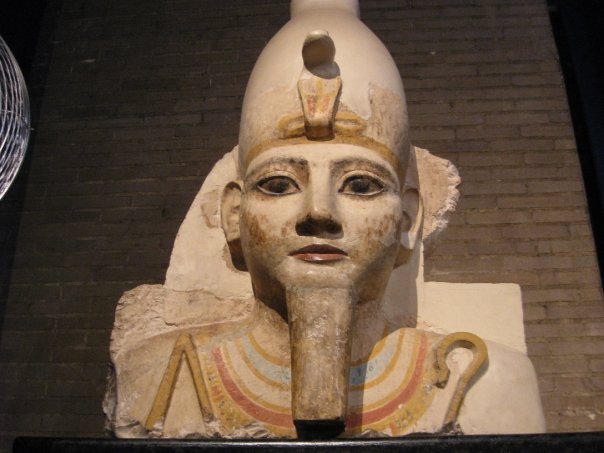
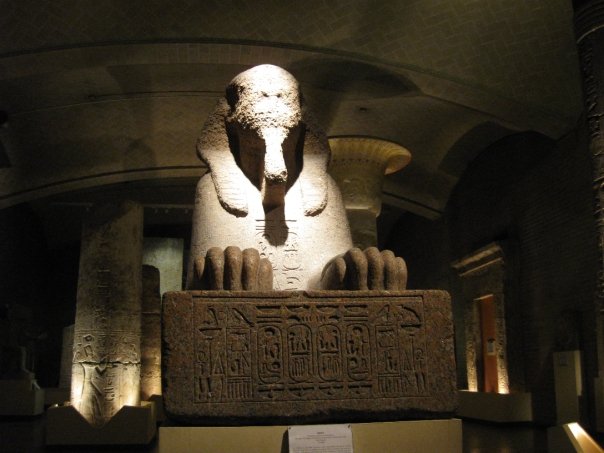
When I lived in Pennsylvania, I managed to drag my parents to the Penn museum with alarming frequency.  Although the museum has a wide ranging collection that includes artifacts from China, Mesopotamia, Rome and Mesoamerica, our excursions were almost always confined to the spectacular Egyptian galleries.  Even now, I can close my eyes and picture in vivid detail the monumental statues of Ramesses II, the mummies in their creepy blue-lit ‘dioramas,’ and the spectacular remains of Merenptah’s palace.  The Penn museum’s Egyptian collection truly has a bit of everything.

I also love the fact that the Penn Museum is totally old school.  You won’t find multimedia kiosks, cartoon characters, or colorful dioramas of daily life here.  Everything is presented in a formal, business-like manner.  The Penn Museum seems to remember that it’s there to educate, not entertain.  Also, because it isn’t as much of a tourist destination as, say, the Metropolitan Museum of Art, youcould go there and explore without being crammed in with 5,000 other people.  My family and I would often be the only ones in a gallery, which made it feel like it was my own personal museum.

I’ve been to museums with much larger and more impressive Egyptian collections, but they’ll never displace Penn’s place in my heart.

More about Tutankhamun

The blogosphere has produced some good commentary on the recent JAMA article I discussed here.

The improbably-named Shoveling Ferret blog has a four-part series discussing the article:

Part 1:
http://shovelingferret.blogspot.com/2010/02/commentary-on-recent-tutankhamun.html
Part 2:
http://shovelingferret.blogspot.com/2010/02/commentary-on-recent-tutankhamun_18.html
Part 3:
http://shovelingferret.blogspot.com/2010/02/commentary-on-recent-tutankhamun_19.html
Part 4:
http://shovelingferret.blogspot.com/2010/02/commentary-on-recent-tutankhamun_8728.html

The author has an MA in Egyptology from Chicago and her commentary is often quite amusing, so I highly recommend checking it out.

Of course not everyone agrees with the conclusions of the JAMA article.  This blogger has posted an in-depth refutation of the idea that the KV55 mummy could be Akhenaten: http://www.kv64.info/2010/03/dna-shows-that-kv55-mummy-probably-not.html

I’m not a geneticist (I don’t even play one on TV), so I can’t comment on the scientific accuracy of her conclusions.  But I think there’s a very strong possibility that the ancient Egyptians at least thought the KV55 mummy was the body of Akhenaten, given its desecrated state.  There’s also the circumstantial evidence of the presence of some of his grave goods in the tomb.  If the mummy is in fact NOT Akhenaten, how do we explain these things?

The Quote of the Day though comes from Justine over at Shoveling Ferret.  She has this to say about the intricacies of Amarna-period royal genealogy:

Pedigree charts are annoying enough, but add in a heaping helping of incest and I’m just like “dude, they were all fucking each other and then they died, the end!”

The Theban Mapping Project

I promise I won’t turn this into Jason’s Boring Ass Egyptology Blog, but I encourage any of you who have even a passing interest in ancient Egypt to check out the website of the Theban Mapping Project: http://www.thebanmappingproject.com/.

While you’re there, I suggest you try out the Atlas of the Valley of the Kings.  It’s an interactive map that shows you every tomb in the valley and, in many cases, there’s a little video narrated by Kent Weeks (Director of the TMP) giving a bit of info about the tomb.  The 3D reconstruction of KV 14 (Taworset and Setnakt) is also worth a look.

Putting faces to names

By now many of you have probably heard about the recent study published in the Journal of the American Medical Association about Tutankhamen.  What was fascinating to me was not so much his cause of death, but the revelations concerning his family tree.

At long last, we can now ascribe mummies to Tutankhamen’s relatives.  The mysterious body found in KV55 was found to be Tutankamen’s father and, given its genetic relationship to Amenhotep III, it’s almost certainly Akhenaten.  The Elder Lady found in KV35 is Queen Tiye, wife of Amenhotep III and mother of Akhenaten.  The Younger Lady who was found next to her is Tutankamen’s as-yet-unnamed mother.  Even more intriguingly, one of the mummies found in KV21 can be identified as the mother of the two embalmed fetuses placed in Tutankhamen’s tomb, which suggests that it’s the mummy of his wife, Ankhesenamen (though that can’t be proven yet).

Perhaps someday we’ll be able to learn more about the posthumous journeys made by Tiye, the Younger Lady, and Ankhesenamen.  Clearly, they were moved out of their original tombs at some point and taken to places of relative safety.  But none of them seem to have been treated well.  Ankhesenamen was left in a small uninscribed tomb with some other woman, while Tiye and the Younger Lady were found unwrapped on the floor of the tomb of Amenhotep II.  I can see why the Younger Lady and Ankhesenamen might get shitty treatment given their relationship to the Heretic King, but surely Tiye should have been treated better.