Titanic Redux

An Australian billionaire has announced plans to build a replica of the Titanic. Naturally, the ship will be named Titanic 2 (most media outlets seem to be writing the name with Roman numerals, but ships traditionally use Arabic numerals, e.g. Queen Mary 2) and it will be constructed in China by CSC Jinling Shipyard.

As a liner enthusiast, I have mixed feelings about this. On the one hand, I’m not too keen on the recent trend toward ever bulkier passenger ships. Ships like the Norwegian Epic and the Oasis of the Seas look more like floating condos than naval vessels. Even the Queen Mary 2 suffers from balconyitis, albeit to a lesser degree.

Epically Obese
Photo of the Norwegian Epic courtesy of Brian Burnell @ http://nuclear-weapons.info

The Titanic, on the other hand, looked very much like a ship, with a lean superstructure and four raked funnels. Aesthetically speaking, the Olympic-class ships were a masterpiece, both inside and out.

The sister who survived
I couldn't find a picture of the Titanic in full profile, so I had to use the Olympic. Photo courtesy of Wikimedia Commons.


As far as I can tell, no designs for Titanic 2 have been released yet, so it’s unknown how closely she will resemble her namesake. However, it’s already been confirmed that she’ll have a bulbous bow for greater fuel efficiency, bow thrusters for greater maneuverability, and a larger rudder. They’ll also have to figure out a new place for the lifeboats. On the original ship, they were stored 59 feet above the water on the boat deck, but current SOLAS regulations require lifeboats to be stored no higher than 49 feet (though Cunard was able to negotiate an exemption for the Queen Mary 2 because of the nasty conditions on the North Atlantic).

The interior will need to be changed as well. I doubt they’ll have steerage, for example, and second class will probably be ditched too. Even first class will need adjustments (back in 1912, private bathrooms were the exception rather than the rule, even in first class!). If they’re truly faithful to the original design, there won’t be any balcony cabins like we know them today. True, the so-called ‘millionaires’ suites’ on B- and C-decks had ‘private promenades,’ but those were totally enclosed. The lack of balcony space could prove detrimental to the ship’s commercial success. After all, one of the reasons the Queen Mary 2 has so many balconies is that they were thought necessary to help recoup her $900 million price tag. Granted, the Titanic 2 won’t be nearly that large, but if she’s constructed like a true ocean liner, she’ll be a lot more expensive than an ordinary cruise ship.

Ultimately, the whole enterprise seems macabre though. After all, the Titanic is only famous because her maiden voyage resulted in the deaths of 1,500 people. I do wonder how they plan to handle that in the brochure!
Lords Reform: A Real Farce

The Joint Committee on the Draft House of Lords Reform Bill published its report on the government’s proposals yesterday. There weren’t really any surprises: the committee recommended an 80 percent elected/20 percent appointed House of 450 members, each of whom would serve for a non-renewable 15-year-term. The elected members would be chosen using a modified version of the single transferable vote method, while the appointed members would be chosen by a statutory Appointments Commission (though the Prime Minister would retain the ability to nominate a limited number of individuals to serve as Ministers in the House of Lords). The Church of England would continue to be represented by bishops, though their number would be reduced to 12. But I have a feeling that this particular scheme is going to go the way of all the other schemes that have been proposed since Lords reform began in 1911.

As always, the stumbling block will be the issue of the relationship between the two Houses of Parliament. Right now, the House of Lords is subordinate to the House of Commons. The Parliament Acts 1911 and 1949 allow the Commons to pass legislation without the Lords’ consent, while the Salisbury Convention states that the Lords will not reject government bills that arise from manifesto commitments.

But although the Lords can no longer fight the Commons on equal terms, they still play a valuable role as a revising chamber. Unlike in the Commons, where legislation is often nodded through without any real scrutiny, the Lords look at every clause of every bill. The Lords is traditionally a much less partisan place than the Commons, and many of its members have real-world experience beyond the Westminster village. The Lords can look at legislation from a different perspective, and their amendments often go a long way toward improving the final product (in fact, the vast majority of Lords amendments are subsequently agreed to by the Commons).

The main problem with the government’s proposals is that they assume that the reformed House of Lords will remain subordinate to the Commons. But while it makes sense for an appointed body to defer to the will of an elected body, it’s hard to see why an elected House of Lords should have to give way. After all, one could argue that it would have greater democratic legitimacy since its members would be chosen through a form of proportional representation rather than first-past-the-post. It would only be a matter of time before the two Houses came into serious conflict, and it’s difficult to see how the primacy of the Commons could survive. Legislative gridlock is all-too-common here in America, but it would throw a real monkey wrench into the British system.

The government’s proposals face a perilous journey to the statute book. I suspect that, deep down, most MPs are aware of the absurdity of one elected chamber having to kowtow to another elected chamber. There are also many Conservative MPs who would love to torpedo Lords reform in order to give Nick Clegg and the Liberal Democrats a symbolic middle finger. If the newspaper reports are to be believed, there are even Cabinet ministers who are quietly encouraging rebellion. Even if the bill squeaks by the Commons, it faces massive opposition in the Lords. Theoretically, the government could use the Parliament Acts to force the bill onto the statute book, but that would require them to get the bill through the Commons twice. Given how divided the Coalition is on the subject of Lords reform, I’m not sure the government would want to re-fight what’s bound to be a bruising battle.

Despite what Nick Clegg and company say now, I suspect the House of Lords will remain in its current form for many years to come.

Christmas comes early!

After years of searching, I’m finally the proud owner of Alexandre Piankoff’s The Tomb of Ramesses VI. Ramesses VI had one of the best-decorated tombs in the Valley of the Kings, and its walls were decorated with an unusually complete selection of Netherworld books. The Bollingen Foundation sponsored a photographic survey of the tomb and commissioned Piankoff to translate the texts into English. Although it was published over 50 years ago and probably went out of print shortly thereafter, Piankoff’s work is still useful because it contains the only English translations of many of these texts.

Unfortunately, second-hand copies of The Tomb of Ramesses VI tend to be quite expensive. The two-volume set usually sells for anywhere from $200-500. But in a stroke of staggering good fortune, I was able to get both volumes for $21 from a seller called Better World Books. Not only did I get a great deal, but they also donate a portion of their proceeds to various literacy-related charities.

As I waited for the books to arrive, I worried that the deal was too good to be true. Happily, my fears proved to be groundless. Both volumes are in excellent condition, and I’m thrilled with my purchase. If you’re looking for used books, you should definitely check them out.

The cost of knowledge

As I was browsing Amazon this afternoon, I came across an interesting book about the relationship between the Duchy of Lancaster and the English Crown in the late Middle Ages. The historian of Britain in me squealed with delight until he saw the price: $140 for the Kindle edition. And that includes Amazon’s 20% discount!

Having spent several years in the Ivory Tower, I’m well aware that academic books are overpriced. I’ve spent a small fortune lining my bookshelves with titles like The Corn Supply of Ancient Rome, The Ancient Egyptian Coffin Texts, and The Rise and Fall of the High Commission. Part of the reason for the inflated prices is that, let’s face it, these books aren’t exactly bestsellers. They’re big, bulky volumes that are almost always produced as hardcover editions to ensure maximum longevity. Their print runs are small since the vast majority of them are destined for purchase by academic libraries. I suspect that only a handful of them fall into the hands of private individuals. With such miniscule demand, you have to charge high prices in order to remain profitable.

But I’m not sure that same argument applies when ebooks are involved. For one thing, the press doesn’t have to worry about the cost of producing a physical copy since it’s all just a bunch of electrons. Charging $140 for something that exists solely on my Kindle is outrageous.

Unfortunately, I don’t see this situation changing any time soon. I don’t have any facts to back this up, but I suspect that the ebook revolution hasn’t exactly caught on in the academic market. Since academic libraries, not private individuals, make up the lion’s share of their sales, academic presses don’t have much incentive to lower their prices. And academic libraries are, to some extent, a captive market. If they want to have a respectable collection in a given field, they’re going to buy most of the new titles that are published in that field.

Thanks to the financial crisis gripping our institutions of higher education, university libraries have less money to spend on improving their collections. Perhaps academic presses will end up having to cut their prices in order to keep selling to these increasingly cash-strapped institutions. Hey, a guy can dream, can’t he?

400 years of the KJV

Yesterday at Westminster Abbey there was a special service to commemorate the 400th anniversary of the Authorized Version of the Bible (AKA the King James Version). The Archbishop of Canterbury gave a great sermon about this enduring masterpiece of English literature, and it’s well worth a read.

The KJV remains my preferred translation of the Bible. I realize of course that the modern translations are more accurate, but their prose lacks the richness and beauty of the KJV. Its glorious language has left an indelible mark on the English language, and many our everyday phrases, from “a fly in the ointment” to “the writing on the wall” have their origin in the KJV. I doubt the modern translations will have that sort of cultural staying power.

Forty-seven men worked on the translation that became the KJV. Most of their names are known only to historians now, but their abiding influence on our language lets them live on in our day-to-day speech. Few other writers can claim such a legacy and, wherever they are, I hope they’re proud of the monument they left behind.

Remembering the SS France

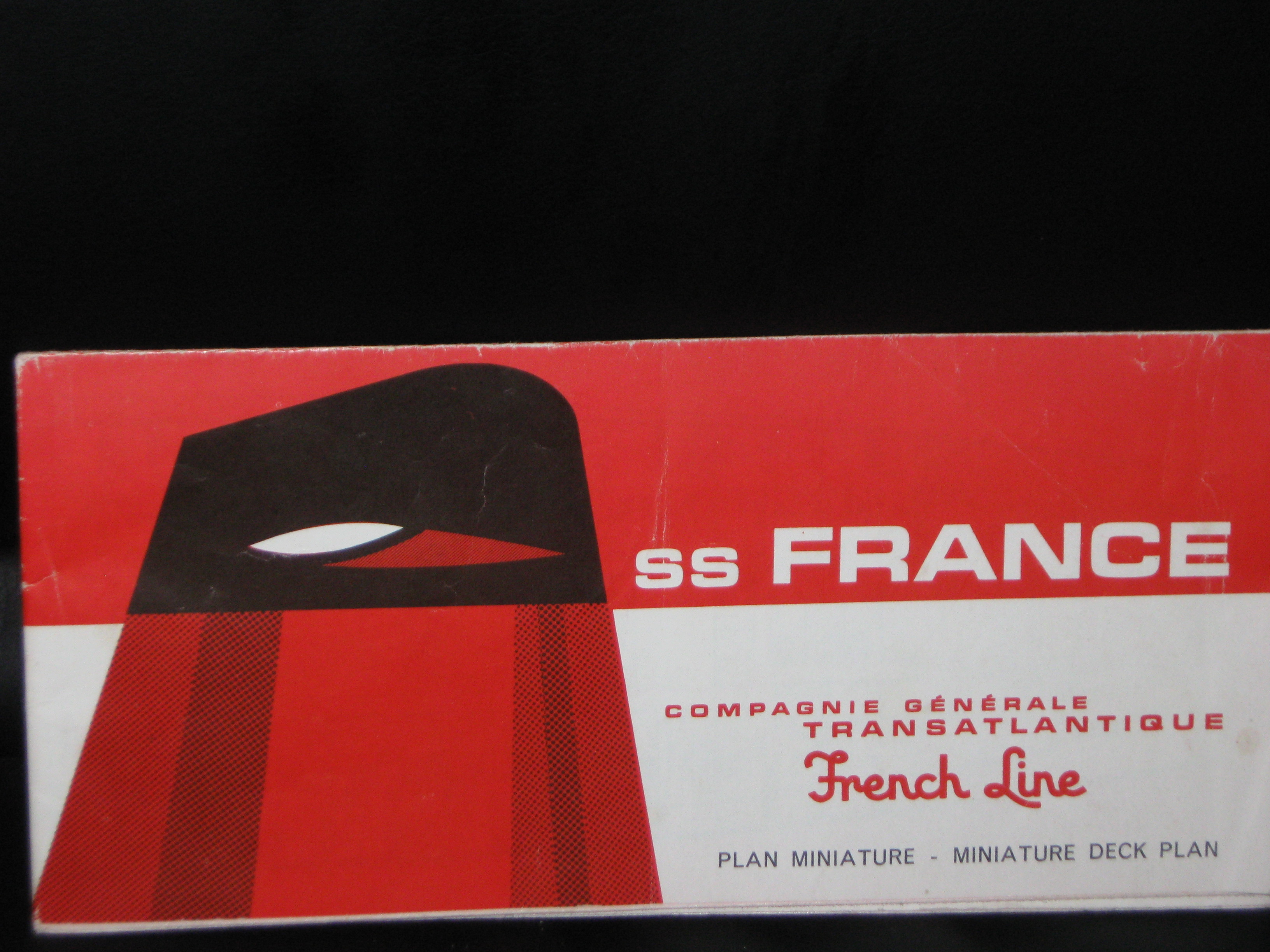
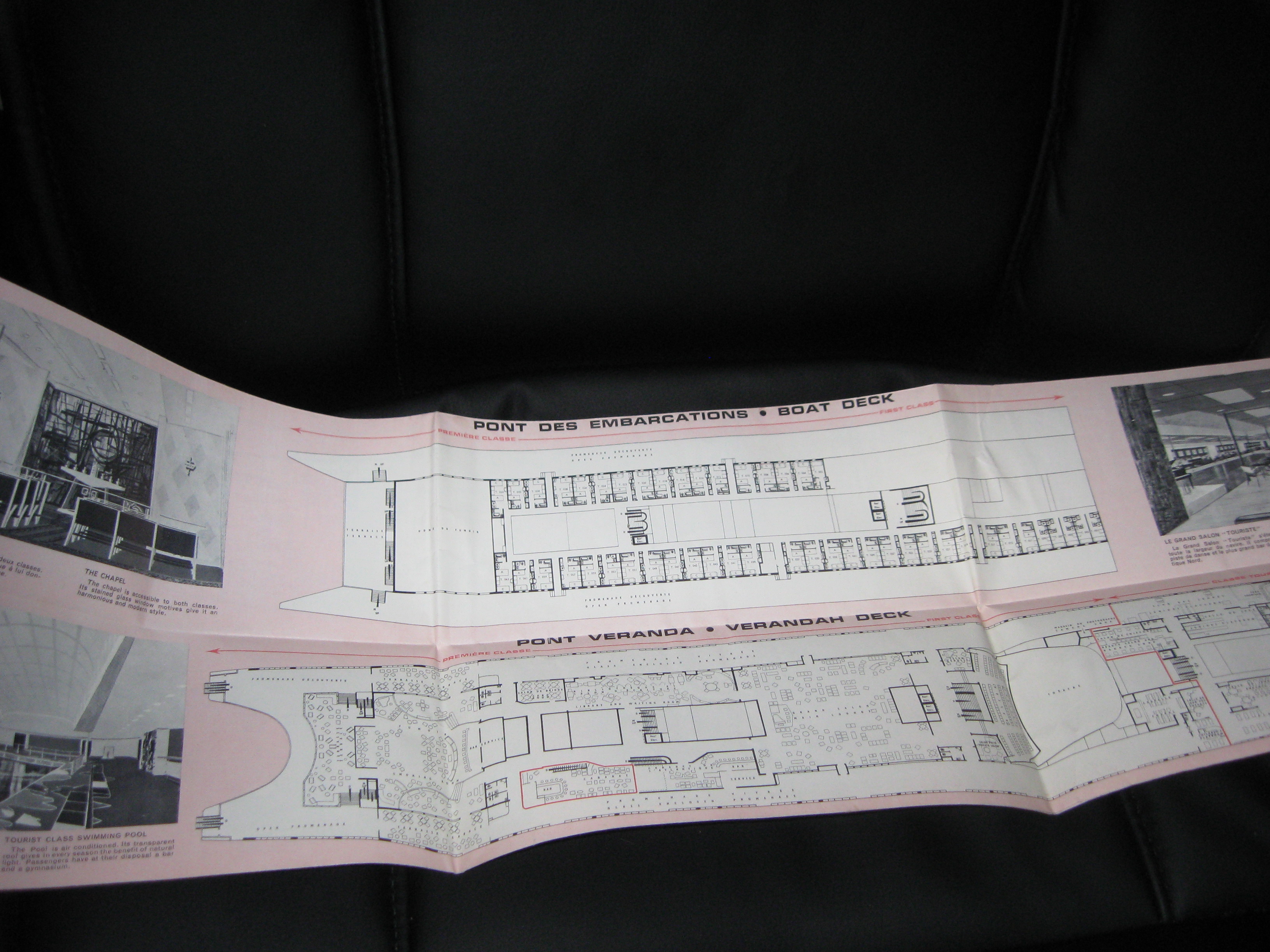
Today ended up being a very happy day here at Casa Loch. Earlier in the week, I won a set of deck plans from the SS France on eBay and they just came in the mail. I’m thrilled to bits; not only did I snag a great deal, but they’re even more incredible than the photos led me to believe.


And here’s a photo of the exterior of the ship:

Photo courtesy of Wikimedia Commons

The France is one of my all-time favorite ocean liners. At 1,035 feet long, she was the longest passenger ship in the world at the time of her construction (a record she held until the construction of the Queen Mary 2 in 2004). From the beginning, she was heavily subsidized by the French government, who hoped that she would become an oceangoing showcase of Gallic culture and design. But when she entered service in 1962, the transatlantic passenger trade was already in decline. Her owners, the French Line, increasingly used her for cruising during the off season, but, like many ships built for the transatlantic run, she wasn’t well suited to sunnier climates. She had little open-air deck space, and both of her swimming pools were indoors. Still, she remained a popular ship, and she continued to sail for the French Line until 1974, when the rising price of oil forced the French government to stop subsidizing her (the funding went to the Concorde instead).

Instead of going to the scrappers, the France received a second lease on life when Norwegian Cruise Line made her their flagship with the new name of Norway. She sailed for NCL until 2003, when a boiler explosion forced her withdrawal from service. By that point, it would have been prohibitively expensive to repair her, and in 2005 she was sold for scrap. By 2008, this grande dame of the seas was no more.

I’m not sure why I like the France so much. Her decor was very much a product of the 60s, and that sort of sleek modernism isn’t usually my thing. But her exterior was amazing (despite the silly little wings on her funnels!), and to me she epitomizes the lean look of a transatlantic greyhound. I wish I could have had the chance to sail on her, and it’s really too bad that she couldn’t live on as a museum ship like the first Queen Mary.  At least I now have these deck plans to remember her by.